
Crypto Real Estate Risks Exposed: RealT Meltdown & BlackRock's Tokenization Revolution
The Dangers of Crypto: Volatility, Scams, and the High Stakes of Digital Assets
Cryptocurrency has long promised revolutionary financial freedom, yet its dangers remain stark and ever-present for investors. Extreme volatility can erase gains in hours, with assets swinging wildly based on market sentiment, regulatory headlines, or macroeconomic shifts. Scams and fraud proliferate in this pseudonymous space, from Ponzi schemes (like the recent DOJ charges against the Florida-based firm Goliath Ventures CEO, Chris Delgado), phishing attacks, to pump-and-dump manipulations that have cost billions in losses. Unlike traditional investments, many crypto holdings lack government-backed insurance, robust regulatory oversight, or SIPC protections, leaving participants exposed to total wipeouts with little recourse. These risks underscore why prudent investors treat crypto not as a sure bet but as a high-stakes gamble requiring extreme caution. Here are 8 common crypto scams and how to avoid them.
Recent Troubles at RealT Highlight Real-World Risks in Tokenized Assets
A timely example of these perils unfolding in the real estate sector surfaced just yesterday with RealT, once hailed as one of the world's largest real estate tokenization platforms. The company fractionalized Detroit properties into crypto tokens sold to over 16,000 global investors, touting up to 12% annualized returns and building a $150 million portfolio. Now, according to reports, RealT faces lawsuits, unfinished projects, and plans to sell off assets while suspending rental income distributions—shifting focus to preconstruction tokens in Colombia and Panama. This mess illustrates how even blockchain-backed real estate can falter due to operational failures, liquidity issues, and external pressures, serving as a sobering reminder that tokenization doesn't eliminate traditional real estate risks.
A Reminder: Tokenized Real Estate Is Still in Early Stages of Revolution
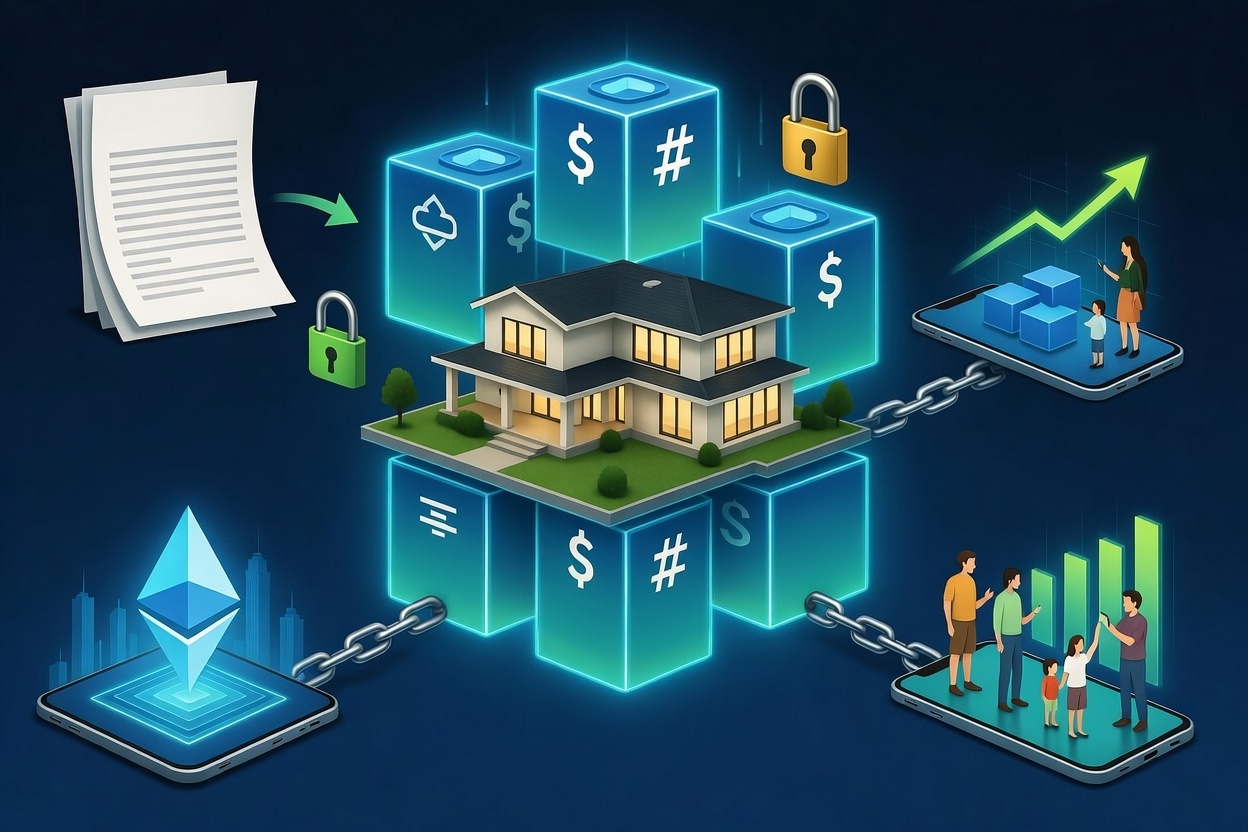
Despite such setbacks, crypto's role in real estate stands at the dawn of a tokenized revolution that could fundamentally reshape property ownership. By converting physical assets into digital tokens on the blockchain, this technology enables fractional shares as small as $50, instant global liquidity, automated rental payouts, and slashed transaction costs. Barriers that once locked everyday investors out of premium real estate—high entry prices and illiquidity—are crumbling. Yet, as with any transformative innovation, the ecosystem is immature, regulatory frameworks are evolving, and scalability challenges persist. This early phase demands patience: today's hurdles are growing pains on the path to mainstream adoption.
Thriving Pioneers Like PROPY, Securitize, and BlackRock Point to Bright Potential
Forward-looking companies are already proving the model's viability amid these nascent stages. PROPY has processed over $4 billion in blockchain-powered real estate transactions, including the world's first NFT property sale, and is now executing a $100 million expansion to acquire traditional title firms in key U.S. states like California, Florida, and Texas—integrating AI and crypto rails to cut closing times and fraud dramatically. Meanwhile, Securitize, the leading tokenization platform backed by BlackRock, recently tokenized a luxury Trump International Hotel & Resort in the Maldives through a World Liberty Financial partnership and is rolling out "real" on-chain stocks with full shareholder rights, while preparing for its own public listing. Complementing this, BlackRock—the world’s largest asset manager—is aggressively advancing the tokenized revolution: CEO Larry Fink has declared the “tokenization of all assets” era has begun (explicitly naming real estate), the firm is building in-house infrastructure to digitize properties alongside ETFs, bonds, and equities, and its pioneering BUIDL tokenized treasury fund (powered by Securitize) has grown into the world’s largest with billions in assets, demonstrating the compliant, scalable rails that will soon unlock trillions in real estate.
"At first it was hard for the financial world — including us — to see the big idea," Fink and Goldstein wrote. "Tokenization was tangled up in the crypto boom, which often looked like speculation. But in recent years traditional finance has seen what was hiding beneath the hype: tokenization can greatly expand the world of investable assets beyond the listed stocks and bonds that dominate markets today."
Navigating the Revolution with Caution and Optimism
In summary, the dangers of crypto—volatility, fraud, and regulatory gaps—cannot be understated, as RealT's current struggles vividly demonstrate. Yet this tokenized real estate revolution is undeniably underway in its early, promising phase, with trailblazers like PROPY, Securitize, and institutional powerhouse BlackRock thriving by blending blockchain innovation with real-world compliance and technology. Investors should proceed with eyes wide open: diversify, verify platforms rigorously, monitor emerging regulations like the GENIUS and Clarity Acts, and invest only what they can afford to lose. If approached wisely, tokenized real estate may soon unlock unprecedented access and liquidity, turning cautious participants into beneficiaries of one of the most exciting shifts in property investment history. As with everything you do, Do Your Own Research. Do your Due Diligence on people and resources.
Disclaimer
The information provided in this article is for general informational and educational purposes only and does not constitute financial, investment, tax, legal, or accounting advice. I am not a licensed financial advisor, certified public accountant (CPA), or attorney.
This content was created with the assistance of artificial intelligence tools (for research, drafting, structuring, or editing), with final review and approval by me. It reflects my personal opinions, experiences, and edits, but AI outputs can contain inaccuracies or limitations.
I do not endorse, promote, recommend, or guarantee the performance, suitability, or legitimacy of any companies, products, services, investments, cryptocurrencies, tokens, projects, or platforms mentioned or linked in this post (or elsewhere on this site). Any references to specific entities are for illustrative or informational purposes only and should not be interpreted as endorsements or investment advice.
Please do not rely on this as professional advice. Always consult with your own qualified financial advisor, CPA, attorney, or other appropriate professional before making any financial, investment, tax, legal, or other decisions. Your individual situation may differ significantly from the examples or general information discussed here.