
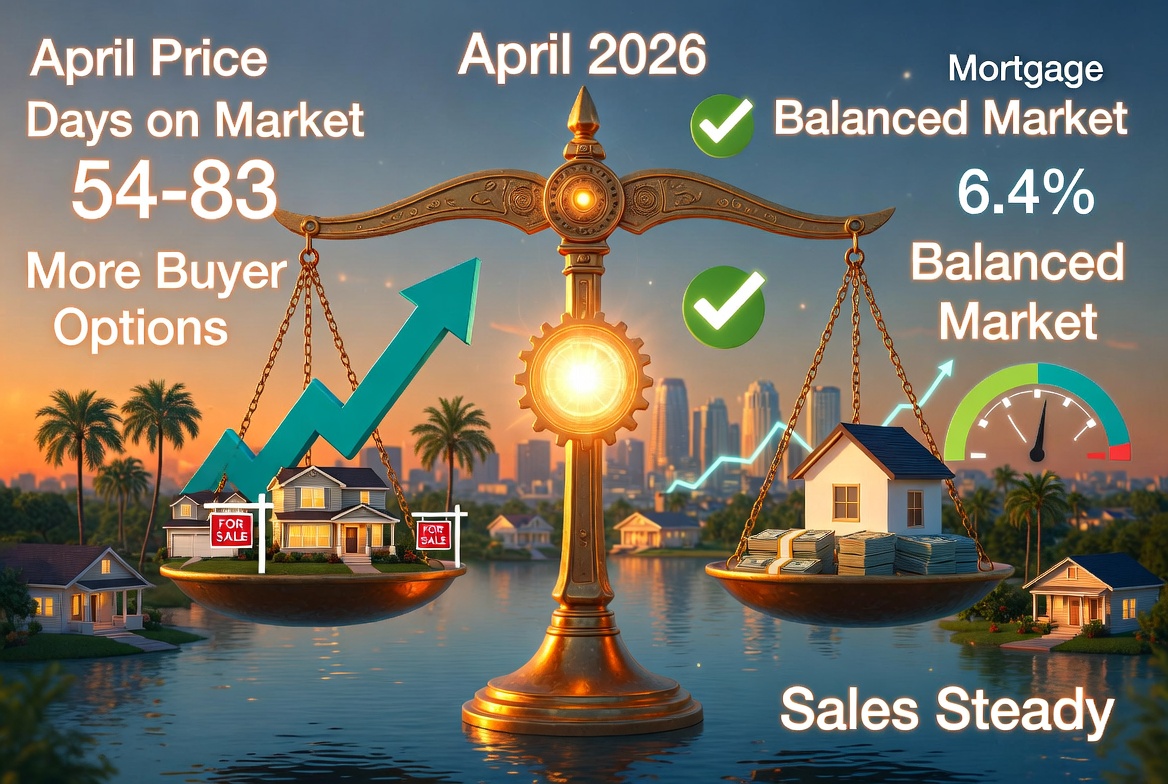
What Every Buyer and Seller Needs to Know Right Now - April 2026
The spring market is here — and it's playing by entirely new rules.
The 2026 housing market is in a fascinating in-between state. It's no longer the frantic seller's market of 2021, but it's not a buyer's paradise either. Whether you're looking to buy your first home or finally list after years of waiting, the landscape has shifted — and understanding the key forces at play could save you tens of thousands of dollars.
6.4%
Avg 30-yr mortgage rate
+20%
More inventory vs. last year
0.3%
Projected home value growth
01 Mortgage rates: the number that moves everything
If there's one thing dominating every conversation between buyers, sellers, and their agents right now, it's mortgage rates. After briefly dipping below 6% in February — giving hopeful buyers a moment of relief — the average 30-year fixed rate has climbed back to the 6.3–6.5% range. That reversal wiped out nine consecutive months of affordability gains in just a few weeks.
The culprit? Geopolitical tensions driving up inflation, which in turn pushes rates higher. The ripple effects are real: buyer demand has cooled, homes are sitting longer, and the affordability math has gotten harder again for first-timers.
"Even a 1% change in the rate can add or remove hundreds of dollars from your monthly payment — that's the difference between qualifying and not qualifying for many buyers."
02 Inventory is back — and it changes everything
For the first time in years, buyers can actually breathe. National housing inventory is up roughly 20% compared to this time last year, with months of supply now sitting between 3.8 and 4.6 months nationally. To put that in perspective: during the peak seller's market frenzy, we were at just 1.5 months of supply.
Why the shift? The long-running "lock-in effect" — where homeowners with 3% pandemic-era mortgages refused to sell — is finally starting to fade. The share of mortgages with rates above 6% now exceeds those below 3%, meaning more sellers are accepting current rates as the new normal and choosing to move on with their lives.
03 Home prices: flat is the new up
Gone are the days of 10–15% annual appreciation. Zillow projects national home values will grow just 0.3% by the end of 2026, while J.P. Morgan's research team puts the figure at essentially flat — 0%. That said, these averages hide dramatic regional variation. Connecticut and the Northeast continue to see meaningful appreciation; parts of Florida and Texas may see prices soften.
For buyers, flat prices combined with increased inventory means more negotiating power than you've had since 2019. For sellers, it means the days of overpricing and waiting for a bidding war are largely over — strategic pricing from day one matters more than ever.
04 Seller concessions are the new normal
Here's a number that tells you everything about today's market: roughly 44% of home sales in early 2026 involved some form of seller concession. That's nearly half of all deals. Sellers are offering rate buydowns, closing cost credits, and repair credits to get buyers to the table.
One of the most talked-about tools right now is the 2/1 buydown — where the seller funds a temporary reduction in the buyer's mortgage rate: 2% lower in year one, 1% lower in year two, before settling at the full market rate. It's a creative way to bridge the affordability gap without cutting the sale price.
Meanwhile, home inspections are back in a big way. At the height of the seller's market, nearly 30% of buyers waived inspections out of desperation. Today, fewer than 18% are skipping them — and buyers are using inspection findings as a second round of negotiation.
05. Who's actually in the market right now
According to NAR's 2026 Home Buyers and Sellers Generational Trends report, Baby Boomers (ages 61–79) now make up 42% of home buyers — dominating both the buying and selling sides of the market. First-time buyers, meanwhile, have fallen to their lowest share on record at just 21%, with the median age of a first-time buyer now at 40.
Co-buying — purchasing with a parent, sibling, or partner to pool resources — is gaining serious traction as an entry strategy for younger buyers locked out by affordability. Townhomes, which now make up roughly 18% of new construction (double from a decade ago), are also filling the gap for cash-constrained buyers.
06 Spring timing: the window is now
If you've been on the fence about listing — or buying — the data says now is the moment. According to Realtor.com's 2026 Best Time to Sell Report, homes listed during the week of April 12–18 received 16.7% more views than the average week and sold approximately nine days faster. Sellers who listed during this window could see median listing prices roughly $26,000 above January levels.
For buyers, mid-April offers the widest selection of fresh inventory before late-spring competition fully ramps up. The sweet spot is right now.
The bottom line for buyers and sellers
FOR BUYERS
You have more choices, more negotiating power, and more protections than in years. Focus on what makes sense for your life — not on timing the perfect bottom. Explore seller concessions and rate buydowns to improve your monthly payment.
FOR SELLERS
Price correctly from day one — buyers are patient and selective. Be prepared to offer concessions and lean into presentation. The spring window is still your friend, especially in the Northeast and Midwest.
The 2026 market rewards preparation and penalizes impulsiveness — for both sides. Whether you're buying your first home or finally making your move, the best thing you can do is understand the rules of the game before you play.